
Canada’s music scene is home to some of the world’s most influential artists, from chart-topping pop icons and Grammy-winning producers to groundbreaking indie acts and hip-hop innovators who’ve reshaped their genres. What makes these artists truly remarkable isn’t just their commercial success or critical acclaim, but the stories behind their rise, the creative decisions that define their sound, and the community connections that fuel their work.
Through conversations with established stars and rising talent, we’ve uncovered what sets Canadian musicians apart: a willingness to experiment across genre boundaries, a deep commitment to authentic storytelling, and a collaborative spirit that bridges regional scenes from coast to coast. Our best Canadian interviews reveal artists who balance international ambitions with hometown pride, who credit local venues and volunteer-run festivals as launching pads, and who actively mentor the next generation.
This article profiles ten diverse artists whose work spans alternative rock, electronic, hip-hop, folk, and beyond. You’ll discover what they’ve shared about their creative processes, the challenges of building a sustainable music career in Canada, and why supporting homegrown talent matters more than streaming numbers suggest. Whether you’re looking to expand your playlist or understand the landscape shaping Canadian music right now, these profiles offer genuine insight from the people making it happen.
What Makes a Canadian Music Artist ‘Popular’?
Popularity in Canadian music is multifaceted, extending far beyond chart positions or streaming counts. While a government streaming study on Canadian artists provides valuable data on digital reach, true popularity encompasses festival bookings, radio play, industry awards, and meaningful cultural resonance within communities across the country. An artist selling out Vancouver’s Commodore Ballroom or becoming a fixture at major folk festivals demonstrates a different kind of success than purely digital metrics can capture.
What distinguishes Canadian popularity from global metrics is the weight placed on cultural impact and community connection. An artist might have modest international streaming numbers yet hold enormous influence within Canada’s folk or roots scenes, shaping how we understand our musical identity. Others build devoted followings through consistent touring, volunteer collaboration with local music organizations, and direct engagement with fans at intimate venues rather than chasing viral moments.
This is precisely where interviews become invaluable. Behind every popularity metric lies a human story, the late-night writing sessions, the cross-country tours in aging vans, the mentorship from established artists, the challenges of maintaining artistic integrity while building an audience. When artists share these experiences in conversation, they reveal the persistence, community support, and creative vision required to achieve meaningful success in Canada’s diverse music landscape. Numbers tell us who’s popular; interviews explain why they matter and how they got there.
The Rising Stars: Emerging Canadian Artists Making Waves
Folk and Roots Voices
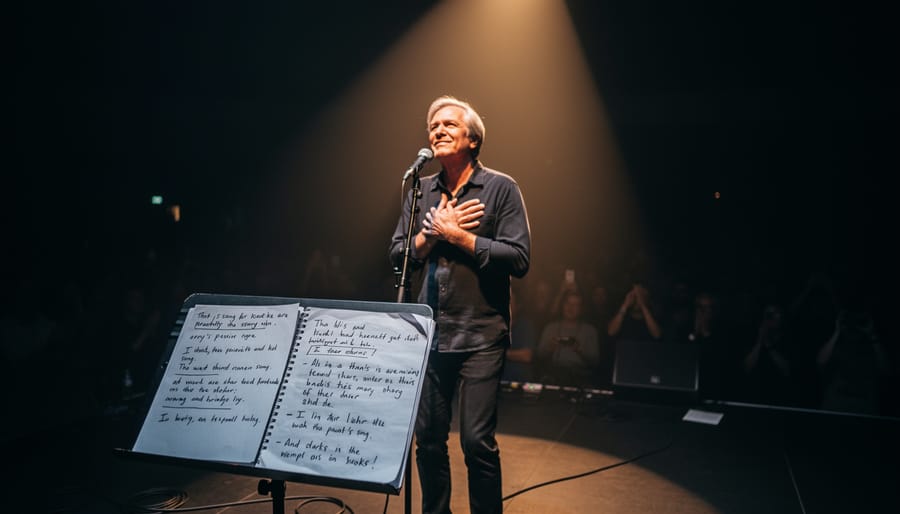
In the folk and roots scene, a new generation of Canadian artists carries forward storytelling traditions while finding fresh ways to make them relevant. These musicians draw from the country’s vast landscapes and diverse histories, weaving personal narratives with collective memory.
Emma-Lee, a Vancouver Island-based singer-songwriter, has captured attention with her stripped-down acoustic arrangements and vivid lyrical imagery. In a recent conversation, she described her songwriting as “documenting the quiet moments, the fog rolling into Ucluelet, conversations with fishermen at dawn, the way grief moves through small communities.” Her debut album weaves together maritime folklore with contemporary environmental themes, creating what she calls “future-ancestor music.” Emma-Lee’s commitment to sustainability extends beyond her lyrics; she performs exclusively at venues powered by renewable energy and donates proceeds to coastal conservation efforts.
Meanwhile, The Barrow Brothers, a trio from rural Saskatchewan, blend traditional Métis fiddling with contemporary folk sensibilities. Lead vocalist Marc Barrow shared how growing up hearing his grandmother’s French-Canadian ballads shaped their sound: “We’re not trying to replicate the past. We’re asking what those old songs would sound like if they were written today, with our experiences layered in.” Their performances incorporate spoken-word segments that contextualize historical narratives, educating audiences about Indigenous and settler stories often omitted from mainstream Canadian history.
These artists remind us that folk music thrives when it reflects real communities and lived experiences, not romanticized nostalgia.
Blues and World Music Innovators
Canadian blues has never existed in a vacuum, and some of the country’s most compelling artists prove it by weaving global sounds into traditional forms. These innovators don’t just pay homage to blues roots, they reimagine the genre through the lens of diaspora, migration, and cultural exchange.
Montreal-based guitarist and vocalist Diely Mori Tounkara brings West African kora traditions into conversation with North American blues, creating what he calls “desert blues with a Canadian accent.” In a recent conversation, he explained how growing up between Guinea and Quebec shaped his sound: “The blues is about expressing struggle and hope through music. That’s universal. Whether it’s the Mississippi Delta or the Sahel, people have always used rhythm and storytelling to survive.” His approach to community building centers on workshops that teach young musicians how cultural fusion isn’t dilution, it’s dialogue.
Toronto’s The Heavyweights Brass Band demonstrates how Caribbean carnival traditions can energize blues structures. Their horn-driven arrangements pull from New Orleans second lines, Trinidadian calypso, and Toronto’s Caribbean neighbourhoods. “We’re not trying to be authentic to any single tradition,” saxophonist Marcus Ali shared. “We’re being authentic to Toronto, which means mixing everything we’ve absorbed living here.” The band regularly performs at community festivals for free, viewing accessibility as central to their mission.
Vancouver’s own Ndidi Cascade fuses Congolese soukous guitar with Pacific Northwest blues grit. Her volunteer work teaching music in Downtown Eastside community centres informs her belief that musical innovation happens when artists stay rooted in real neighbourhoods, not just genres. She describes her sound as “what happens when you grow up listening to your parents’ records and your city’s streets at the same time.”
Established Icons: Canadian Artists with Lasting Impact
Some Canadian artists don’t just have hits, they’ve spent decades building musical legacies that define what it means to be a Canadian musician. Through interviews, these established icons reveal how they’ve maintained relevance while staying true to their roots, and how they’ve used their platforms to uplift communities and emerging artists.
Buffy Sainte-Marie stands as a towering figure in Canadian folk music, her career spanning over six decades. In conversations about her longevity, she consistently emphasizes education and cultural preservation. She’s spoken candidly about how her early activism through music paved the way for Indigenous artists to claim their rightful space in the industry. What interviews reveal is her unwavering commitment to mentoring younger musicians and ensuring Indigenous stories are told authentically. Her Cradleboard Teaching Project, which she discusses with genuine pride, has brought Indigenous culture into classrooms across North America. She’s never chased trends, instead, she’s created them, and her recent album work proves she’s still pushing boundaries while honouring traditional sounds.
Gordon Lightfootbefore his passing, left behind countless interview moments that captured his humble approach to a legendary career. He rarely boasted about his global influence, instead focusing on the craft of songwriting and the importance of telling Canadian stories through music. What emerges from these conversations is a man who viewed music as public service, who believed in showing up for small-town festivals just as readily as major venues. His philanthropic work, often done quietly, supported music education programs and heritage preservation across Canada.
Bruce Cockburn brings a different energy to the established artist category, one marked by relentless curiosity and social consciousness. Interviews with Cockburn reveal an artist who’s never stopped learning, whether it’s mastering new guitar techniques or studying global conflicts that inform his politically charged lyrics. He speaks thoughtfully about the responsibility that comes with having a platform, and he’s consistently used his to advocate for environmental protection and human rights. His community work extends beyond performances; he’s actively involved in charity initiatives that address poverty and displacement, issues that thread through his music.
Loreena McKennitt has built her career on artistic independence and cultural exploration. When she discusses her journey in interviews, she emphasizes the importance of maintaining creative control and staying connected to the Celtic and world music traditions that inspire her. She’s remarkably open about the business side of music, offering insights that help younger artists understand sustainability in the industry. Her philanthropic efforts, particularly the Cook-Rees Memorial Fund she established, demonstrate how personal tragedy can transform into community support, funding water safety research and music therapy programs across Canada.
These artists share a common thread: they’ve never treated fame as the endpoint. Their interviews consistently circle back to community, to passing knowledge forward, and to using music as a tool for connection rather than just entertainment.
Behind the Music: What Interviews Reveal About Canadian Artists
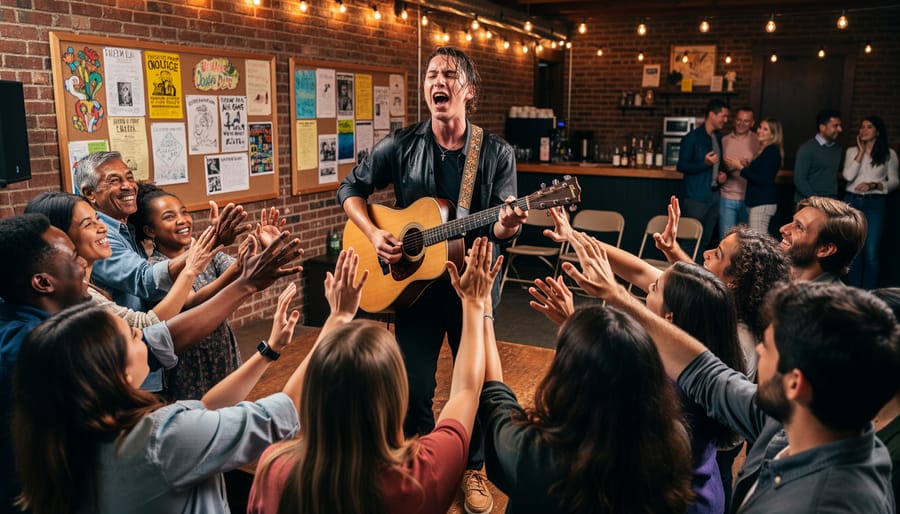
When you sit down with Canadian musicians for honest conversations, patterns emerge that reveal what drives their artistry beyond the spotlight. These interviews expose the unglamorous realities of creating music in Canada while celebrating the community bonds that sustain artists through difficult periods.
Creative Challenges and Vulnerability
Nearly every Canadian artist interviewed speaks candidly about periods of self-doubt and creative blocks. They describe the tension between artistic integrity and commercial viability, especially in a country where regional markets fragment audiences. Many reveal that their breakthrough moments came not from sudden inspiration but from persistence through months of revision and collaboration. These conversations strip away the myth of effortless genius, showing instead the disciplined craft behind memorable songs.
The Community Support Network
A recurring theme across genres is how essential community support proves for sustaining Canadian music careers. Artists consistently credit local music venues, grassroots festivals, and volunteer-run organizations for providing platforms when commercial opportunities remained scarce. They emphasize that financial donations and volunteer hours matter more than social media follows during lean periods. This isn’t abstract gratitude, it’s acknowledgment that community infrastructure creates survival pathways for musicians navigating Canada’s vast geography and fragmented markets.
Volunteer Collaboration as Creative Fuel
Interviews reveal how working with passionate volunteers energizes artists beyond typical industry relationships. Musicians describe volunteers as genuine enthusiasts who approach projects with fresh perspectives rather than transactional mindsets. These collaborations often spark unexpected creative directions, from experimental recording techniques to innovative concert formats. The volunteer-driven model championed by platforms like Vancouver Music Magazine exemplifies this reciprocal relationship, where artists gain authentic support while volunteers access meaningful cultural participation.
Accessibility and Inclusion Commitments
Canadian artists increasingly articulate commitments to making music accessible across economic and physical barriers. Interviews uncover what musicians want: venues with barrier-free access, sliding-scale ticket pricing, and all-ages events that welcome diverse audiences. They advocate for music as community right rather than luxury commodity, pushing back against exclusivity in favour of shared cultural experiences that strengthen social fabric.
Genre Diversity: The Breadth of Canadian Musical Talent

Canada’s musical landscape defies simple categorization. From the Celtic-influenced folk of the Atlantic provinces to the blues traditions rooted in Montreal’s underground clubs, geography shapes sound in distinct ways. Artists consistently describe in interviews how their physical environment, the isolation of prairie winters, the multicultural energy of Toronto, the coastal rhythms of British Columbia, becomes woven into their creative output.
What sets Canadian talent apart is the willingness to cross boundaries. A roots musician might incorporate Indigenous drumming traditions; a blues guitarist draws from Québécois folk melodies; a world music ensemble layers Celtic fiddle over West African percussion. This genre-blending isn’t calculated fusion, it reflects the lived experience of artists navigating Canada’s multicultural reality.
| Genre | Notable Characteristics | Interview Insights |
|---|---|---|
| Folk | Storytelling focus, acoustic instrumentation, regional dialects | “The landscape speaks through the songs, you can’t separate the land from the lyrics” |
| Blues | Urban grit, harmonica traditions, winter themes | “Canadian blues carries this cold-weather melancholy that’s different from Delta or Chicago styles” |
| Roots | Heritage preservation, community collaboration, traditional instruments | “We’re custodians of traditions our grandparents brought across oceans” |
| World Music | Cultural fusion, polyrhythmic layers, multilingual lyrics | “In Vancouver, my band speaks five languages, that diversity is our signature sound” |
Interview conversations reveal how Canadian identity itself becomes a creative asset. Artists speak of reconciling contradictions, the tension between vast wilderness and urban density, between European heritage and Indigenous presence, between American cultural proximity and distinct national character. One world music artist described it as “making music from the in-between spaces where cultures meet and create something new.”
This genre diversity isn’t just stylistic variety. It represents Canada’s demographic reality translated into sound, where a single festival lineup might feature Acadian fiddle, Punjabi-Canadian fusion, Northern soul, and experimental folk without any sense of incongruity.
How to Support Popular Canadian Artists

Supporting Canadian artists goes beyond passive listening, it requires active engagement with their work and the community structures that sustain them.
Start with the fundamentals: stream their albums, purchase music directly from artist websites or Bandcamp, and attend live performances. Concert ticket sales and merchandise purchases provide artists with immediate, meaningful income that streaming alone rarely matches.
Engage deeply with the content that connects you to these musicians. Read interview highlights to understand their creative journeys, then share these stories on social media. Tag artists when you post about their music, write thoughtful comments on their videos, and introduce friends to their work. This social proof helps algorithms surface their content to wider audiences.
Volunteer your time and skills with music organizations like Vancouver Music Magazine. These platforms depend on community involvement, writers, photographers, event coordinators, and social media managers all play crucial roles in amplifying Canadian voices. Even a few hours monthly contributes to a sustainable ecosystem.
Financial support matters profoundly. Direct donations to non-profit music platforms ensure they can continue providing free, accessible content while compensating artists fairly. Consider supporting Canada Council grant programs through advocacy, contact your representatives about maintaining arts funding that helps emerging artists develop their craft.
Sign up for artist newsletters, join fan communities, and participate in crowdfunding campaigns for album releases or tours. These direct connections transform casual listeners into invested supporters who sustain careers.
Frequently Asked Questions About Canadian Music Artists
Where can I find interviews with Canadian artists?
Vancouver Music Magazine regularly publishes in-depth interviews with Canadian musicians across folk, blues, roots, and world music genres. You can explore more interview stories on the platform to gain deeper insights into artists’ creative processes and personal journeys.
How do Canadian artists gain popularity?
Popularity comes through a combination of factors: consistent live performances, streaming numbers, festival bookings, media coverage, and strong community connections. Many Canadian artists build their followings through grassroots support, word-of-mouth recommendations, and authentic engagement with fans rather than relying solely on commercial metrics.
What genres are most popular in Canadian music?
The Canadian music scene is remarkably diverse, with strong traditions in folk, roots, blues, indie rock, and world music. Artists often blend genres, drawing from Indigenous influences, immigrant cultures, and regional sounds that reflect Canada’s multicultural identity and vast geography.
How can I discover emerging Canadian talent?
Attend local music festivals, follow community-focused platforms like Vancouver Music Magazine, explore curated playlists on streaming services, and connect with regional music venues. Volunteering with music organizations also provides direct access to discovering new artists before they reach wider audiences.
Supporting Canadian musicians goes beyond listening to their music. Active engagement through donations to music platforms, volunteering at events, sharing content, and attending live shows creates the sustainable ecosystem that allows diverse talent to thrive and continue producing the authentic work that makes Canadian music special.
Discovering popular Canadian music artists through interviews opens a window into their hearts, minds, and creative spirits, revealing dimensions that streaming numbers and festival stages can’t capture. When you read our interviews you hear authentic voices sharing struggles, breakthroughs, and the community connections that sustain their artistry.
Canadian music thrives because people like you actively support it. Attend local shows, share artists you love, and engage with the stories behind the songs. Consider volunteering with organizations dedicated to amplifying diverse voices, whether helping with event coordination, content creation, or outreach efforts. Every contribution strengthens the ecosystem that allows folk, blues, roots, and world music artists to flourish.
Financial support matters too. Donations to volunteer-driven platforms like Vancouver Music Magazine directly enable continued interview coverage, artist spotlights, and community building across genres. Your support ensures emerging and established musicians alike receive the recognition they deserve.
The Canadian music landscape is rich, diverse, and welcoming. Dive deeper, connect authentically, and become part of the community that celebrates these remarkable artists.